
According to the World Bank, 15% of the world’s population lives with some form of disability. There is a great need to provide services so that the disabled can live healthy, active and independent lives.
The United Nations has declared 3 December as the International Day of Persons with Disabilities. The theme this year focuses on the empowerment of persons with disabilities for inclusive, equitable and sustainable development. IEC Standards help improve the lives of those with disabilities and enable their active participation in the public sphere.
The IEC, through its Systems Committee for Active Assisted Living (SyC AAL), works on providing AAL solutions for people with disabilities. Additionally, the work of several IEC Technical Committees (TCs) also helps to address specific needs.
Visually impaired
ICT equipment already includes software solutions, such as optical character recognition, character magnification or voice recognition systems and hardware including adapted or on-screen keyboards.
Visually impaired users can also use an innovative colour ID app to ‘see’ what colour any item is, by holding the smart phone in front of it. They can coordinate their wardrobe, check if a piece of fruit is ripe, or choose the right lipstick. Other systems can translate voice to text or reproduce sign language for those with impaired hearing.
TV services have become more accessible to the blind and visually impaired by explaining what is happening on screen, using the gaps in dialogue and audio description.
IEC TC 100: Audio, video and multimedia systems and equipment, has set up Technical Area 16: AAL, accessibility and user interfaces. It has developed tools, such as the optical character recognition, character magnification or voice recognition systems and hardware including adapted or on-screen keyboards.
Liquid level indicators can help by beeping when a cup is nearly full, enabling visually impaired people to do something as simple as make a cup of tea without scalding themselves. IEC TC 47: Semiconductor devices, produces standards for the design, manufacture, use and reuse of sensors as well as for measuring and testing methods.
Hearing loss
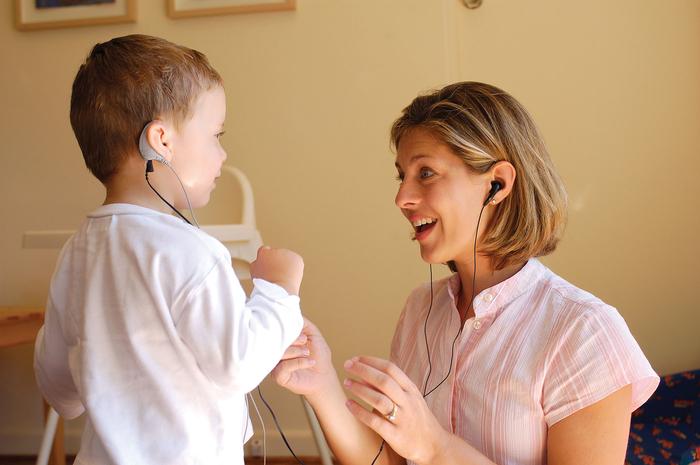
Hearing aids are an essential tool in helping those suffering from hearing loss with an estimated 8 million of such devices manufactured each year. IEC TC 29 is responsible for developing standards related to hearing aid performance, specification and measurement. It has also developed standards which allow wearers of specially equipped hearing aids to have a wireless signal transmitted directly to their ear in places like museums or theatres.
TC 29 has recently published the fifth edition of IEC 60118-13, which is a fundamental standard for manufacturers of hearing aids as it specifies the requirements and methods of measurement for electromagnetic (EM) immunity to mobile digital wireless devices.
Smart alarm systems and smoke detectors adapted for people with hearing impairments alert users by flashing intermittently, or, if the person is lying down, by vibrating (under a pillow or mattress). The wireless transmitters in some of these systems can also connect to home security systems, videophones or the doorbell and send alerts from these.
IEC TC 79: Alarm and electronic security systems, prepares International Standards for a wide range of applications and systems including electronic access control, alarm transmission, video surveillance, fire detection and fire alarm systems, and remote receiving and/or surveillance centres. Its work also covers interoperability between different services.