
What are the key technologies impacting the standardization of hearing aids? Is artificial intelligence (AI) becoming important?
It can be argued that hearing aid technology used AI long before it became fashionable. There is a highly complex cognitive element to hearing which can identify human speech amongst a multiplicity of background noises and enables us to localize the speaker. In an ideal world, the performance of a hearing aid must be able to do the same and technology has strived to implement a similar processing of various sounds. Since the early 1990’s, the introduction of digital hearing tools has opened the way for sophisticated real-time algorithms which have helped create ever more sophisticated hearing aids. While AI is important for the development of hearing aids, our recent work has focused on integrating elements of the Bluetooth Auracast standard, developed by the Bluetooth Special Interest Group, that will be used for assistive listening systems for hearing aid users in public places.
Hearing aids are an important part of your standardization work but not only – can you explain what other areas you cover?
Hearing aids are covered by one of our working groups which also happens to be the largest in TC 29. We have another eight working groups covering other areas of electroacoustic instruments and systems for acoustic and audiometric measurements. The other major area covered by our experts in TC 29 is noise measuring instruments. These can be used for the assessment of environmental noise, which is an important sustainability consideration and a factor in human health and wellbeing, including mental health. According to the World Health Organization (WHO), excessive environmental noise seriously harms human health as it can disturb sleep, cause adverse cardiovascular, metabolic, psychophysiological and birth outcomes, to name but a few. We also produce standards relating to the measurement of noise that is even more of a direct hazard for human beings as it can provoke serious hearing damage, usually within an occupational context. This includes excessive noise in the workplace, due to machinery for instance.
TC 29 is mostly concerned with audible sound but is increasingly looking into measuring sound outside the usual range of human hearing. Infrasound (very low-frequency sound) and ultrasound can have physiological effects and be disturbing, despite being generally inaudible. Instruments are therefore needed to make reliable measurements of these effects before their mitigation can happen.
What are the main challenges for your TC in the coming years?
The use of electroacoustic transducers has become widespread in consumer products (smart devices, IoT, wearables, etc.) and autonomous vehicles. They could have even wider applications in actively managing the noise environment in cities, especially now that renewable sources of energy (with their associated potential for noise pollution) have become mainstream. While these applications are currently outside the scope of TC 29, there are cases where the specification and performance evaluation of sensors and transducers, and their calibration (where necessary), are not covered by standardization. TC 29 needs to find the resources to evaluate the requirements and identify experts to address these new needs.
Hearing aids are also becoming increasingly complex, notably by integrating with smartphones and other IT devices, which calls for close cooperation with a very diverse range of stakeholders in the future.
What are the recent standards you have published and which ones can we look forward to?
A key standard that has recently been published is IEC 60118-0. A standard which provides recommendations for measuring the performance characteristics of hearing aids and is applicable to the measurement and evaluation of the electroacoustic characteristics used for type testing and manufacturer data sheets. The standard is subject to European harmonization under MDR (Medical Device Regulation). Another key standard for hearing aids, also to be harmonized under MDR and currently under revision is IEC 60601-2-66 which is part of the 60601 series of international standards for the safety and essential performance of medical electrical equipment. This provides the requirements for the basic safety and essential performance of hearings aids.
We are also revising the IEC 61252 standards which are used to assess the exposure of a person to noise during a working day. They measure whether the prescribed safe level of noise experienced over a working day is exceeded. They are one of the tools available to mitigate hearing damage caused in the workplace. The update provides an improved way of ensuring the accuracy of noise dosimeter designs.
Many consumer products, like smartphones or smartwatches, can measure noise these days but there is no assurance of the accuracy of these measurements. The difference between an app on a smartphone and a dosimeter or a validated sound level meter is that TC 29 has produced standards that ensure the measurements of these devices are valid. IEC 61672-3, for instance, specifies how noise meters should produce reliable results with quantifiable levels of accuracy. Legal action against noise pollution in the workplace or elsewhere can only use recognized data as established in our standards.
We are also standardizing recent tech. The newest part of the IEC 60118 series on hearing aids, deals with assistive listening systems based on 2,4 Gigahertz audio streaming. Bluetooth LE Audio and Auracast are key technologies for wireless audio signal transport, which is the result of the updated and improved Bluetooth system. The broadcasting capability of Bluetooth Auracast enables an unlimited number of receivers to pick up signals from a single transmitter and it works with all types of Bluetooth-enabled products that deliver sound, including hearing aids, headsets, earbuds and loudspeakers.
How important are gender-responsive standards for your TC?
Developing gender responsive standards is vital to make sure that the whole population is equally served by IEC Standards. In TC 29, all our experts are very aware of the importance of gender aspects and how it can potentially affect our standards. I have recently joined the joint advisory group formed by ISO and IEC on gender responsive standards and am therefore very keen to push the issue forward.
TC 29 has many women experts. How important is it for your TC to be diverse?
Diverse groups bring various perspectives, and considering all aspects leads to better outcomes and sustainable solutions. In TC 29, we are fortunate to have several women involved in our essential work, including our former Chair, Susan Dowson. We have also successfully encouraged young people to join our work. The diversity within our TC is crucial as it offers different viewpoints and solutions, enriches our discussions, and ultimately results in better standards. The TC 29 community values all perspectives, and I firmly believe that all experts, regardless of gender and background, should feel included and valued. I experienced this first hand when I became Secretary in 2018. I was made to feel very welcome, and my ideas were well received right from the start. Our management team, which includes several women, is an excellent example of the value of diversity, which fosters new ideas.
I am very proud to be part of TC 29 and would like to highlight that the success of TC 29 is a joint effort between our Chair Richard Barham, Assistant Secretary Lotte Sørensen, Technical Officer Miroslav Siket and the rest of the TC 29 community.
What do you do to unwind?
I renovate old houses. They have always been my passion, and I enjoy doing things with my hands – it helps me relax. I also practice kickboxing, and I enjoy travelling with my family.
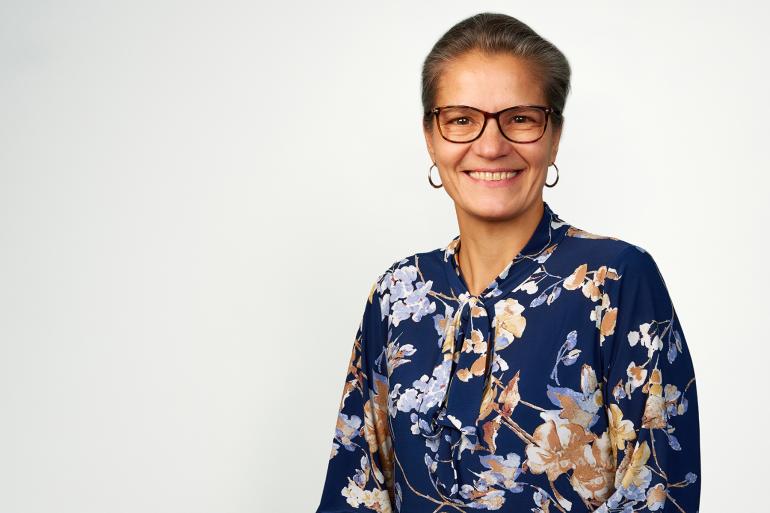
Lise Schmidt Aagesen is a Civil Engineer, who qualified at the DTU Technical University of Denmark. She has been involved in Danish and international standards since 2015 and became the Secretary of TC 29 in 2018. Her career has taken her to hold a variety of roles as a certified building and energy consultant.